

Families & Couples
Couples Location Sharing Boundaries: Healthy Ways to Stay in Sync
The DTP Team · 25 Sept 2026 · 11 min read
Families & Couples
 The DTP Team · 4 July 2026 · 6 min read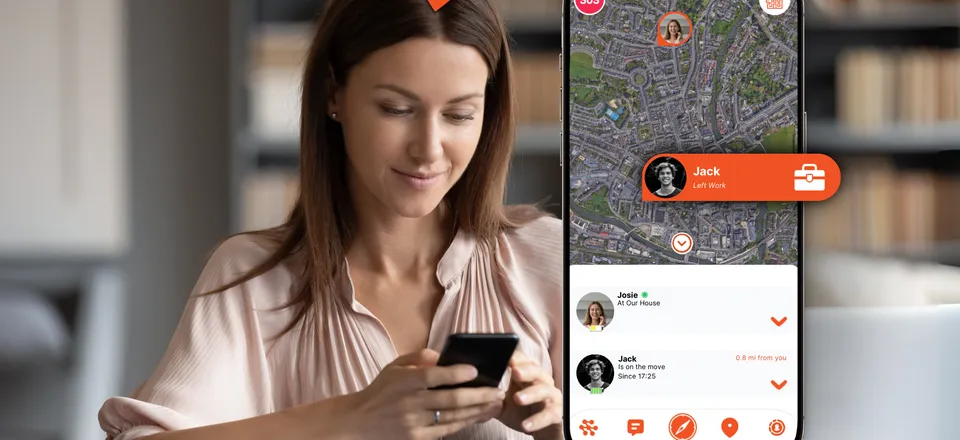
Location sharing between couples has become normal enough that not doing it can raise an eyebrow — but it’s also one of the few app features that can mean two completely different things depending on how it’s used. For one couple, it’s a quiet background reassurance: you can see your partner’s train is running late, or that they’ve landed safely after a flight. For another, it becomes a tool for one partner to monitor the other’s every move. Same feature, opposite experience.
The difference isn’t the technology. It’s consent, purpose, and whether either person can say “actually, let’s turn this off for a bit” without it becoming a fight.
Most couples we hear from aren’t sharing location because they don’t trust each other — it’s closer to the digital version of a “text me when you’re home” habit that’s always existed in relationships, just automated. Common, genuinely healthy reasons include:
None of these require tracking every movement, all the time. They’re moments of reassurance, not surveillance.
If you’re introducing location sharing into a relationship — or you’ve had it on for a while and it’s never actually been discussed — a short conversation up front avoids most of the problems later. Worth agreeing on:
Share your location the healthy way
Mutual, opt-in location sharing built for two — with in-app messaging and check-ins.
In practice, the couples who get the most out of location sharing tend to use it lightly rather than constantly checking the map. A few features do most of the work:
Device Tracker Plus works the same way whether you’re both on iPhone, both on Android, or one of each — a real consideration for couples, since “just use Find My” only works if you’re on matching devices.
For couples living in different cities or countries, a shared map does something a phone call can’t: it makes the distance feel a little more concrete. Knowing your partner just got to the office, or landed after a long flight, or is five minutes from a call you’re both looking forward to — it’s a small thing, but it adds up. Location sharing won’t replace video calls or visits, but as one part of staying connected across distance, it’s worth having in place.
It’s worth naming the other end of the spectrum honestly, because it’s common enough to matter. Location sharing has become tangled up in some relationships with control — one partner demanding constant visibility, treating a paused share as suspicious, or using the app to check up rather than to connect. A few signs it’s drifted into that territory:
None of these are about the app itself — they’re relationship patterns that happen to use an app as the mechanism. If any of this sounds familiar, it’s worth a conversation about the underlying dynamic rather than a settings change. Location sharing is meant to add reassurance to a relationship that already has trust in it, not manufacture trust that isn’t there.
Location sharing tends to mean different things depending on where a relationship is. Couples who’ve just moved in together often use it lightly, more out of habit than necessity, since you already broadly know where each other is. Couples living apart — across a city, a country, or further — tend to lean on it more, since a shared map fills in the gaps that a daily phone call can’t. Neither is more “correct”; it’s worth simply checking in with each other periodically about whether the current setup still fits, particularly after a move, a new job with different hours, or any other change in routine.
Because location data is genuinely sensitive, it’s worth asking any app you use the same question you’d ask about a bank: what happens to this information? Device Tracker Plus never sells your personal data, to anyone — your location stays between you and your partner, not with advertisers or data brokers. That’s the standard we think every couple deserves, whether they use our app or someone else’s.
Try Device Tracker Plus with your partner
Connection, not surveillance — set up in a couple of minutes.
Used well, location sharing is a small, quiet act of care in a relationship. Used badly, it’s control wearing a safety feature’s clothing. The app doesn’t decide which one you get — the conversation you have before you turn it on does.
It can be — the difference usually comes down to consent and purpose. Sharing your location because you both want the reassurance of knowing the other got home safely is different from one partner demanding access to monitor the other. If it's mutual, opt-in, and something either partner can pause without an argument, it's a tool. If it isn't, no app feature fixes that.
There's no single right answer — some couples share constantly and like the low-level connectedness, others only turn it on for travel, nights out, or long shifts. What matters more than the setting is that you've actually talked about it and agreed, rather than one person assuming.
That's worth listening to rather than pushing past. There are lots of reasonable reasons someone might be hesitant, including previous relationships where tracking was used to control them. Start smaller — check-ins instead of live tracking, for instance — and revisit it once there's trust in how the feature is actually used.
No. We never sell your personal data, full stop — location shared between partners on Device Tracker Plus stays inside your group. It's not shared with data brokers or advertisers.

Device Tracker Plus
We build Device Tracker Plus, a location-sharing app for families, couples and carers who want to stay connected without compromising on privacy. This blog is written by the same team that builds and supports the app.
The DTP Team · 25 Sept 2026 · 11 min read

The DTP Team · 18 Sept 2026 · 10 min read

The DTP Team · 4 Sept 2026 · 8 min read
Connection, not surveillance. Share your location with the people who matter — never with anyone else.
We never sell your personal data.