

Families & Couples
Couples Location Sharing Boundaries: Healthy Ways to Stay in Sync
The DTP Team · 25 Sept 2026 · 11 min read
Families & Couples
 The DTP Team · 18 September 2026 · 10 min read
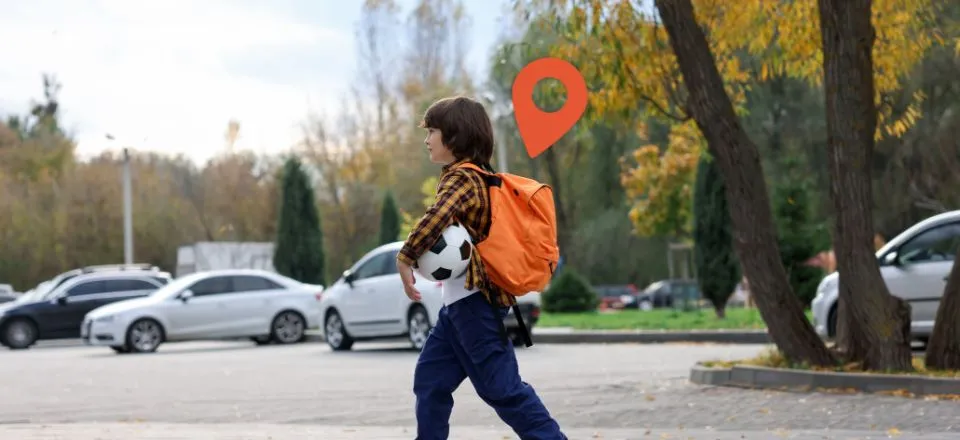
Every parent’s life has a distinct morning that arrives with an unexpected mix of pride and quiet apprehension. Your child reaches for their school bag, zips up their coat, and announces that they want to walk to school on their own. Up until this moment, the morning school run has been a shared routine of holding hands across pedestrian crossings, gentle reminders to watch the kerb, and chatting about the day ahead. Stepping back and letting them head down the pavement unaccompanied represents a monumental milestone in their growing independence.
For parents, this transition often triggers an internal tug-of-war. On one hand, you recognise that learning to navigate the local neighbourhood independently is a vital life skill that builds self-reliance, spatial awareness, and everyday confidence. On the other hand, a natural protective instinct makes you worry about busy main roads, distracted drivers, and unexpected delays along the way.
Keeping your child safe when they start walking to school alone isn’t about eliminating every possible uncertainty through overbearing supervision. Instead, it is about giving your child the practical road skills, clear decision-making frameworks, and subtle safety tools they need to travel confidently, while giving you the quiet reassurance that they have reached the classroom safe and sound.
One of the most common questions parents ask is whether there is a specific age when a child should be allowed to walk to school unaccompanied. In the UK, there is no formal legal age that dictates when a child can walk alone, but primary schools and child safety charities generally identify the transition period around Year 5 and Year 6—roughly between ages 9 and 11—as the typical window.
However, developmental readiness matters far more than chronological age. A confident ten-year-old walking a quiet residential route with broad pavements and clear zebra crossings faces a very different challenge from a child who must navigate complex multi-lane junctions, blind bends, or roads without continuous footpaths.
Evaluating your child’s readiness requires looking closely at their daily habits and decision-making skills:
Taking an honest look at these behaviours will help you decide whether your child is ready for full independence, or whether a few more weeks of guided practice would be beneficial.
Confidence is built through familiarity. Long before your child takes their first genuine solo journey, spend time turning the walk into a shared training ground where they gradually take the lead.
Begin by having your child act as the route guide while you walk quietly alongside them. Encourage them to explain their choices out loud: why they chose a particular crossing point, how they judge the speed of approaching traffic, and which side of the street offers better visibility. This simple exercise allows you to observe their instincts in real time while reinforcing good habits without lecturing.
Once they feel comfortable leading the way, transition to shadow walks. Walk twenty or thirty paces behind them, giving them the physical sensation of independence while you remain within sight to observe how they handle blind driveways, junctions, and pedestrian crossings.
During these dry runs, take time to identify safe havens along the route. Point out trusted spots—such as a familiar corner shop, a local library, or the home of a family friend—where your child can step inside and ask for assistance if they ever feel unsettled, encounter bad weather, or drop their belongings. Knowing these safe points exist gives children an immediate sense of security if unexpected hiccups arise.
Clear, agreed-upon boundaries prevent misunderstandings and keep daily journeys predictable. Sit down together before the first solo walk to agree on a sensible set of rules that your child understands and respects.
First, establish a strict “stick to the agreed path” policy. Children can easily be tempted to take shortcuts through quiet alleys, cut across unlit parkland, or explore unfamiliar side streets with classmates. Make it clear that independence comes with the responsibility of following the designated route every single morning, with no spontaneous diversions.
Second, address mobile phone etiquette directly. If your child carries a smartphone, establish a firm rule that the handset must remain securely inside their zipped bag or pocket while walking near roads. Staring down at a screen or wearing noise-cancelling headphones completely removes a pedestrian’s spatial awareness, making it impossible to hear approaching electric vehicles, bicycles, or emergency sirens.
Third, encourage the buddy system whenever possible. Walking with a small group of classmates or an older sibling makes the morning journey more enjoyable and adds an extra layer of visibility. Group walking encourages children to look out for one another and provides immediate support if someone stumbles or drops a book.
Finally, discuss how to handle interactions with strangers calmly and sensibly. Modern safety guidance moves away from frightening concepts of stranger danger, focusing instead on teaching children to recognise safe adults. If your child ever feels uncomfortable, lost, or needs help, they should know to seek out someone in uniform, a shopkeeper behind a counter, or another parent walking with young children.
When a child takes their first solo steps, the natural inclination for anxious parents is to keep their eyes glued to a live map screen. It feels like a modern way to protect them, but staring at a pulsing dot moving down a digital street creates unintended stress for everyone involved.
For parents, continuous map-watching amplifies ordinary moments into perceived crises. If your child stops for ninety seconds to tie their shoelace, adjust their rucksack, or chat with a neighbour, a watching parent immediately begins to wonder why the pin has stopped moving. Anxiety builds rapidly, tempting you to make an urgent phone call that disrupts your child’s focus right as they are approaching a road crossing.
For children, knowing that an adult is actively monitoring every footstep can undermine the very self-reliance you are trying to foster. Independence requires space to make decisions, develop confidence, and experience personal responsibility. When children feel hovered over, it signals that you do not fully trust their abilities, which can increase their nervousness rather than alleviate it.
At Device Tracker Plus, our core values are built on Safety Without Surveillance and Connection, Not Control. We believe location tools should serve as an unobtrusive safety net that operates quietly in the background, stepping in only when truly needed so your child can enjoy their growing independence without feeling watched.
The most effective way to eliminate morning anxiety without hovering is by using automated place alerts. Rather than watching a live map, virtual boundaries allow technology to manage arrival confirmations quietly on your behalf.
By setting up a safe zone around your child’s primary or secondary school, your phone receives a simple, passive notification the moment they step through the school gates. You do not need to open an app, refresh a screen, or send an intrusive text message asking “Did you get there?”
Consider the rhythm of a normal morning. You wave goodbye from the front door at twenty past eight and head inside to make a cup of tea or start your workday commute. At twenty to nine, your phone provides a quiet alert confirming your child has entered the school grounds. You gain immediate peace of mind, your child enjoys their independent walk with friends, and the school day begins smoothly for everyone.
Automated alerts are equally valuable for the afternoon journey home. Knowing the exact moment your child leaves the school perimeter allows you to gauge their arrival time accurately, ensuring you are ready to welcome them home or notice unexpected delays well before they become a worry.
Even with thorough preparation, everyday life occasionally presents unexpected challenges. A sudden downpour, a sprained ankle on an uneven paving slab, or a road closed by emergency services can momentarily shake a young person’s confidence.
Teaching your child how to respond to unforeseen situations gives them resilience. Ensure they know that if they ever feel confused or out of their depth, their first step should be to stop, find a safe spot away from traffic, and contact home calmly rather than trying to guess their way forward.
In rare moments where urgent help is needed, modern tools offer immediate lifelines. The Device Tracker Plus Mobile Safety Suite includes an intuitive, one-tap SOS panic button built directly into the companion app. If your child encounters a genuine emergency, feels unsafe, or needs immediate assistance, pressing the alert immediately broadcasts their exact geographical coordinates to connected family members, allowing you to respond or dispatch help without delay.
Mishaps involving mobile phones are also common among school-aged children. Handsets frequently slip out of blazer pockets onto grass verges or get left behind on classroom desks. Device Tracker Plus provides a flexible dual-tool architecture to support families through both daily routines and sudden misplaced device scrambles:
When you introduce location sharing to support your child’s daily school commute, protecting their personal privacy is just as important as keeping them safe on the road. Families are sharing sensitive information about daily schedules, home addresses, and the exact routes young children walk every morning.
Many free utilities fund their platforms by harvesting user location history and selling personal movement data to external marketing networks and commercial aggregators. Exposing a child’s regular daily routines to commercial exploitation introduces unacceptable digital security risks.
Device Tracker Plus operates on an absolute standard of user privacy: we will never sell your data.
Your child’s movement history, journey timelines, and personal details remain encrypted and strictly confined to your approved household circle. We believe family safety tools should protect your loved ones in every sense, providing practical reassurance without compromising your household’s digital privacy.
Watching your child walk down the pavement on their own for the first time is a milestone you will always remember. It represents an important transition from the sheltered days of early childhood toward the responsible, capable young adult they are becoming.
Letting a child walk to school independently is ultimately a shared partnership between parent and child. By taking the time to practise routes together, setting clear ground rules around road safety, and leaning on passive tools like automated place alerts, you create a supportive environment where independence can flourish naturally.
With the right preparation and a reliable safety net working quietly in the background, your child can take those first independent steps with a proud stride—and you can watch them go with complete peace of mind.
Most road safety organisations and primary schools suggest children are generally ready to walk independently between the ages of 9 and 11, typically during Year 5 or Year 6. Readiness depends heavily on the child's maturity and confidence, as well as the complexity of their route.
By setting up automated safe zones around their school in a family safety suite, parents receive a quiet notification the moment their child enters the school perimeter. This provides instant peace of mind without interrupting the child's morning routine or causing distractions during classroom registration.
Children should be taught to identify safe public spaces along their route, such as a known local shop, library, or friend's house.

Device Tracker Plus
We build Device Tracker Plus, a location-sharing app for families, couples and carers who want to stay connected without compromising on privacy. This blog is written by the same team that builds and supports the app.
The DTP Team · 25 Sept 2026 · 11 min read

The DTP Team · 4 Sept 2026 · 8 min read

The DTP Team · 11 Jul 2026 · 6 min read
Connection, not surveillance. Share your location with the people who matter — never with anyone else.
We never sell your personal data.